Throughout the centuries-long history of the Ao Tu Than in Vietnam, artisans continually refined traditional tunics to balance aesthetic grace with cultural meaning. In the mid-twentieth century, a few experimental tailors in Saigon even tested an unconventional three-panel variation featuring two back flaps and a single wide front panel fastened from a high collar down to the waist, paired with flared bell-bottom trousers rather than classic wide-leg silk pants. However, this eccentric experiment quickly faded because its exaggerated cut clashed with the gentle, poised character of Vietnamese women. More successful was the mid-century raglan-sleeved tunic and the compact “mini raglan” silhouette with shorter panels and a neat high collar, which remained popular among young women in Saigon until April 1975.
Hairstyles, Coiled Turbans, and the Five Cardinal Virtues
Historical chronicles indicate that in earlier centuries, both Vietnamese men and women kept their hair long and coiled in a neat chignon at the nape of the neck. Only after French cultural influence spread in the late nineteenth and early twentieth centuries did the movement toward short haircuts emerge, transforming how traditional cloth hair wraps (khan van) and coiled turbans (khan dong) were worn. Today, because many women wear shorter hairstyles rather than coiling a heavy bun, pre-wound circular turbans keep the hair tidy during ceremonies without tangling.
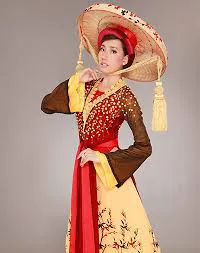
Every detail of the traditional wardrobe carries deep philosophical meaning, as documented across our structural characteristics archives. When a bride wears a ceremonial wedding turban, it is classically wound in twelve concentric folds symbolizing the twelve earthly branches and complete marital harmony. Meanwhile, the traditional five-panel tunic (ao ngu than) evolved from the four-part dress features five buttons fastened along the right chest flap, representing the five cardinal virtues of Eastern philosophy: Benevolence (Nhan), Righteousness (Nghia), Propriety (Le), Wisdom (Tri), and Trustworthiness (Tin).
Traditional Color Codes and Ceremonial Pride
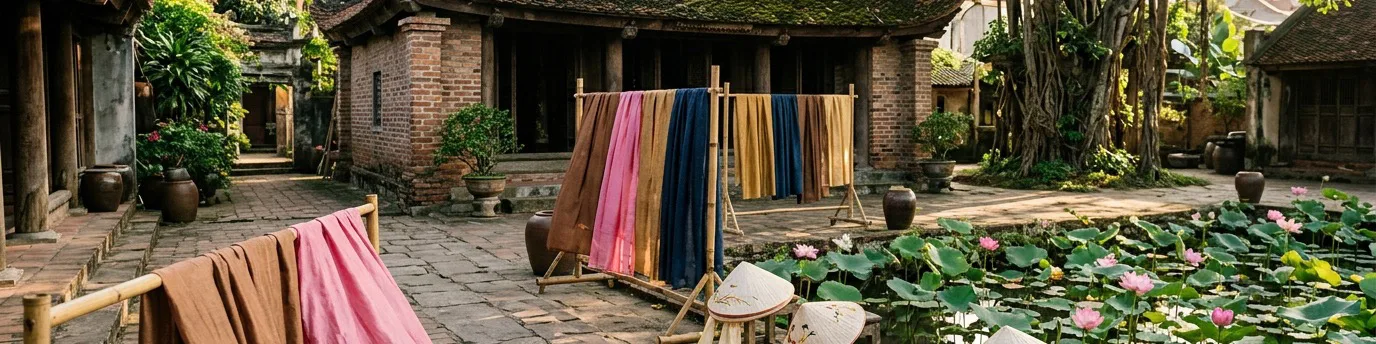
In feudal color regulations, radiant imperial yellow was reserved exclusively for the monarch and royal family, while vermilion red adorned sacred deities in village communal houses and shrines. Aristocrats and mandarins dressed in patterned brocades and luminous silks, whereas rural commoners wore earthy brown or dark indigo fabrics suited to agricultural labor, reserving plain white cloth for mourning attire. Today, contemporary couturiers honor these classic earthen palettes through works such as Xuan Thu’s ceramic-inspired brown Ao Tu Than designs.
Across eras, traditional costumes of Vietnamese women associated with the Ao Tu Than have celebrated feminine nobility and grace. Vintage photographs from the 1940s through the 1960s still evoke nostalgic images of Saigon schoolgirls in flowing white tunics riding black Vélo-Solex motorbikes, with one silk flap tucked neatly behind the saddle as the breeze lifted the panels. In formal weddings today, pairing the groom’s five-ring turban and five-panel robe with the bride’s twelve-ring turban and ceremonial tunic preserves the proud spirit of four thousand years of Vietnamese civilization during weddings, village festivals, and Lunar New Year celebrations.