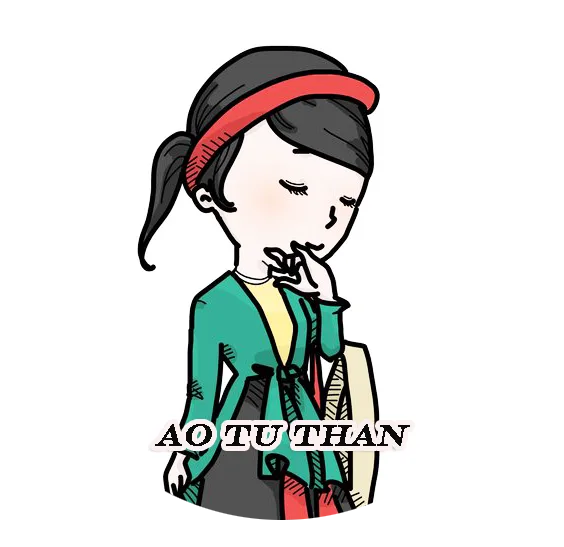
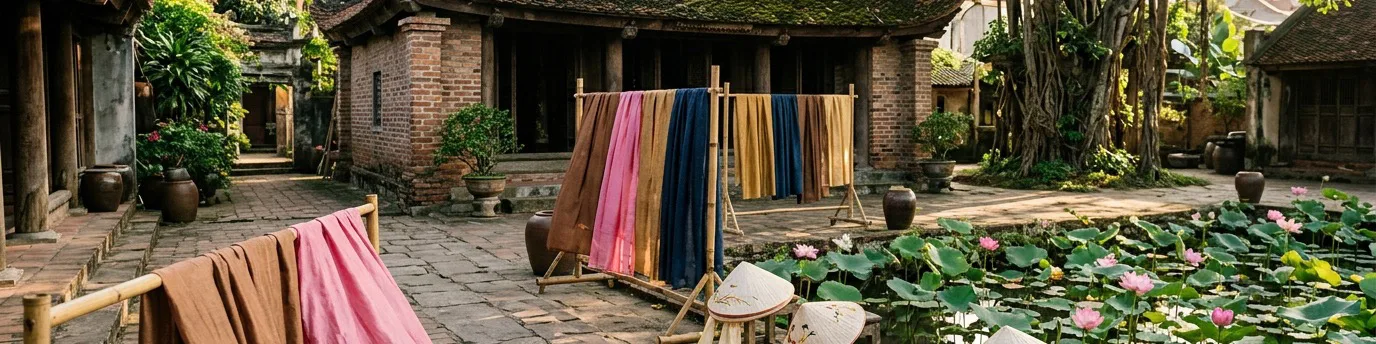
Accompanying the Ao Tu Than in Northern Vietnam is the traditional black square kerchief, folded diagonally into balanced triangles so that its central crease forms a crisp crow-beak peak right at the top of the forehead. Paired with this headscarf is the wide, flat palm-leaf hat known as the non quai thao. Generously proportioned to shield the wearer's face from sun and rain while maintaining a cool, airy shade, the hat can also be held gracefully in the hand during folk performances, highlighting why Vietnamese women look so captivating in the Ao Tu Than and why the Ao Tu Than and kerchief define the charm of Kinh Bac women.
The Southern Ao Ba Ba: Practicality and Tailoring Evolution
While the four-panel robe represents the Northern delta, the three-panel blouse known as the Ao Ba Ba is inseparably linked with women of Southern Vietnam. Farmers across the Mekong Delta historically wore black Ao Ba Ba ensembles paired with matching black silk trousers because the dark fabric concealed river mud, washed easily, and dried quickly after laundering. Cut with side slits reaching the hips for ease of movement, the fitted bodice also featured two generous lower pockets ideal for carrying matches, coins, and small daily tools. Because of its exceptional comfort and versatility, rural women wore the Ao Ba Ba while working in the fields, visiting floating markets, and attending village festivities. As cultural researcher Pham Bich Hang observes: "The Ao Ba Ba was designed in harmony with the riverine environment of the Southern delta. Local farmers traditionally wear black or brown ensembles for everyday convenience, always pairing the blouse with a checkered khan ran scarf woven in alternating two-color squares draped lightly over the shoulders, accentuating the rustic warmth of Vietnamese countrywomen."
In later decades, urban tailors refined the traditional Ao Ba Ba so that it retained its folk identity while embracing a sleeker, modern silhouette. Contemporary versions are no longer cut completely straight and loose; instead, tailors add subtle darts at the waist and bust to gently contour the figure. Artisans also introduced decorative shoulder yokes, fitted cuffs, and diverse necklines—including lotus-leaf collars, swallow-wing lapels, and scalloped edges—adapted from international dressmaking, alongside creative modern shirt designs inspired by the Ao Tu Than. Sleeve construction evolved significantly as well. Moving away from the older one-piece sleeve cut continuously with the bodice, Southern tailors in the 1970s popularized the raglan assembly. With raglan tailoring, the front and back panels separate smoothly from the shoulders while the sleeve extends diagonally from the neckline to the underarm. Today's Ao Ba Ba hugs the waist comfortably without feeling restrictive, often featuring slightly flared sleeves and soft front pockets.
The Ao Dai: Craftsmanship and Timeless National Pride
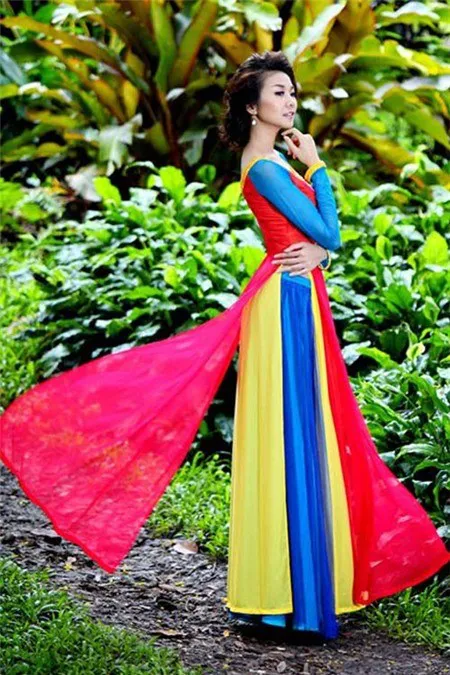
No exploration of Vietnamese women's attire is complete without celebrating the iconic Ao Dai. Across every province, Kinh women take deep pride in this slender, figure-hugging tunic tailored with a high standing collar and two full-length panels front and back that flow from the neckline to the ankles over wide-legged silk trousers.
Ms. Le Thi Quyen, proprietor of the renowned Vinh Trach Ao Dai shop at 23 Luong Van Can Street in Hanoi, who possesses over sixty years of experience tailoring traditional long dresses, recalled: "In earlier decades, the Ao Dai was constructed with set-in shoulders and fastened with snap buttons along the right side. The standing collar was modest—measuring only about three centimeters high rather than the taller collars seen later—and the sleeves left a gentle ease around a slender arm. Evolving from the Ao Tu Than, the four separate panels were unified into two flowing flaps to showcase a graceful posture. Set-in shoulders gave the upper bodice a structured, balanced frame; although it did not follow the diagonal seam of a raglan sleeve, the waist tapered naturally and the chest looked poised and full. Today, sewing a raglan sleeve is much simpler and emphasizes a soft, slender waistline."
When wearing formal long robes, women with long hair traditionally coil their tresses into a velvet-rimmed headband, a cloth turban, or pair the ensemble with a conical palm hat, whereas younger women often style a neat low bun or ponytail for a fresh, youthful appearance. Fabrics range from jacquard silk and brocade to hand-embroidered floral motifs. Researcher Pham Bich Hang notes: "The Ao Dai embodies the cultural quintessence of Vietnam. In the 1930s, artist Cat Tuong pioneered the modern silhouette by adapting the ancestral Ao Tu Than. Despite decades of historical change and Western fashion influences, the tunic preserves its traditional soul and exalts the gentle stature of Vietnamese women." Across thousands of years of textile artistry documented in our traditional Vietnamese beauty archives, these garments continue to accompany Kinh Bac and Vietnamese women as they step confidently into the modern world.