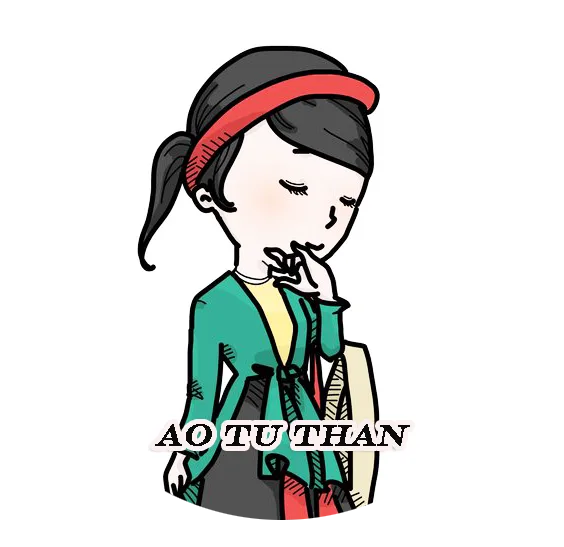
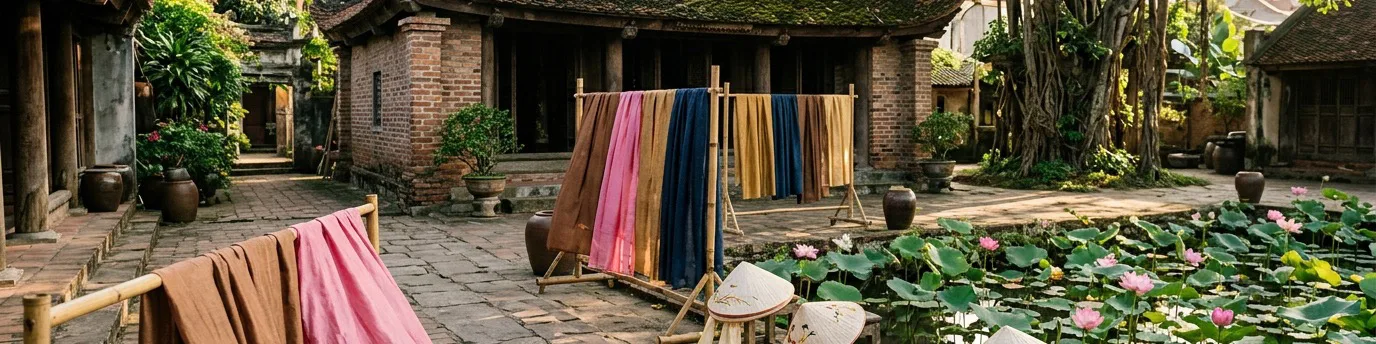
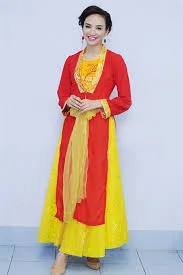
The Áo Tứ Thân (four-panel tunic) is a vibrant, multi-layered traditional ensemble that highlights the graceful charm and gentle poise of Vietnamese women and young girls. Recognized for centuries as the signature four-panel attire of Northern Vietnam, the áo tứ thân was widely worn as everyday dress up through the early decades of the twentieth century. Although it is no longer worn for daily farm or market work today, it remains a treasured cultural costume worn during traditional village festivals, folk music performances, and spring celebrations with traditional Tet customs in Vietnam.
Historical Meaning and Traditional Fabrics
Throughout its long history—including the classic golden era of the 1920s and 1930s documented in Ao Tu Than in different periods (Part 1) and Ao Tu Than in different periods (Part 2)—the four-panel dress has embodied the Vietnamese outlook on family devotion and human affection. Its four outer cloth panels symbolize the wearer's four parents (tứ thân phụ mẫu), while the two front panels knotted together at the waist represent conjugal harmony, gratitude, and the enduring bond of husband and wife. Depending on whether the garment was meant for everyday wear or festive ceremonies, artisans tailored the áo tứ thân from coarse cotton (vải chúc bâu), raw sồi silk, Nam Định dragon cloth, sheer silk gauze (vải the), smooth silk (lụa), or crêpe (nhiễu).
Four-Panel Construction and Headwear
Structurally, the áo tứ thân consists of two back panels and two front panels, a hallmark design detailed across our Characteristics Archives. Because traditional handlooms wove fabric bolts measuring only 35 to 40 centimeters wide, tailors joined four narrow strips of cloth to form the full robe. The two back panels are stitched together down the center of the spine to form a long vertical seam called the sống áo, whereas the two front panels remain separate so they can be tied neatly at the waist. Because the outer tunic has no buttons, a woman wears a high-necked bodice (áo yếm) and a thin inner blouse beneath the robe, creating a harmonious interplay of four coordinated colors. A bright silk sash (thắt lưng) is tied around the waist to secure the blouse and long black skirt while adding a vivid decorative accent.
Completing the áo tứ thân ensemble are the braided hair roll (khăn vấn đuôi gà), the crow's-beak kerchief (khăn mỏ quạ), and the flat palm hat (nón quai thao). Folding a beautiful crow's-beak kerchief requires skill and aesthetic balance: if the central peak sits too high, the forehead looks overly steep, whereas tying it too low shadows the face. When folded deftly, the black kerchief curves like a crescent moon around the cheeks beneath the wide nón quai thao. Today, the áo tứ thân remains deeply beloved, and many parents eagerly choose miniature four-panel dresses for their daughters to wear for Lunar New Year festivities and commemorative spring photographs.