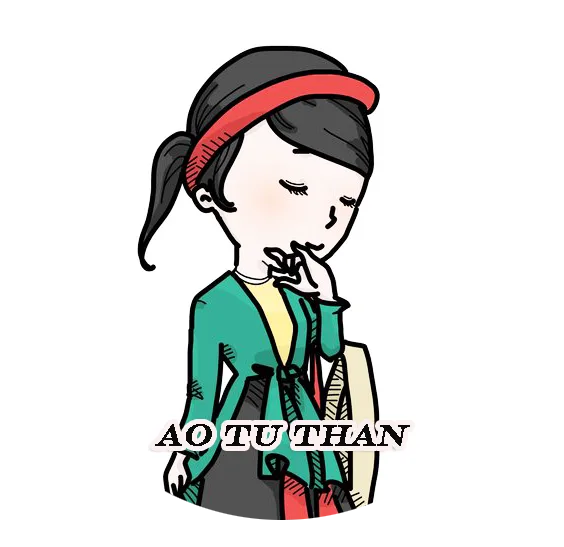
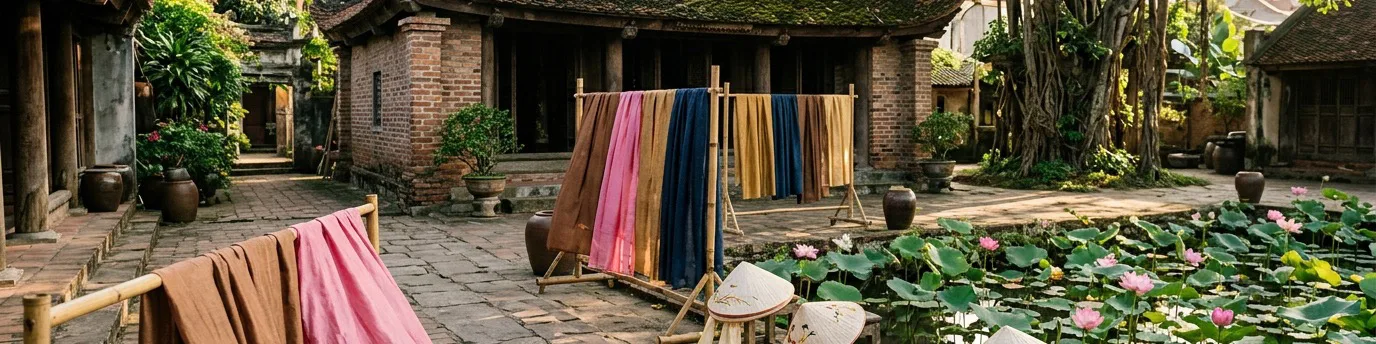
As one of the most iconic traditional dresses of Vietnamese women, the Áo tứ thân embodies the national soul and centuries of cultural history tied to the homeland, a theme explored throughout our cultural meaning and heritage essays.
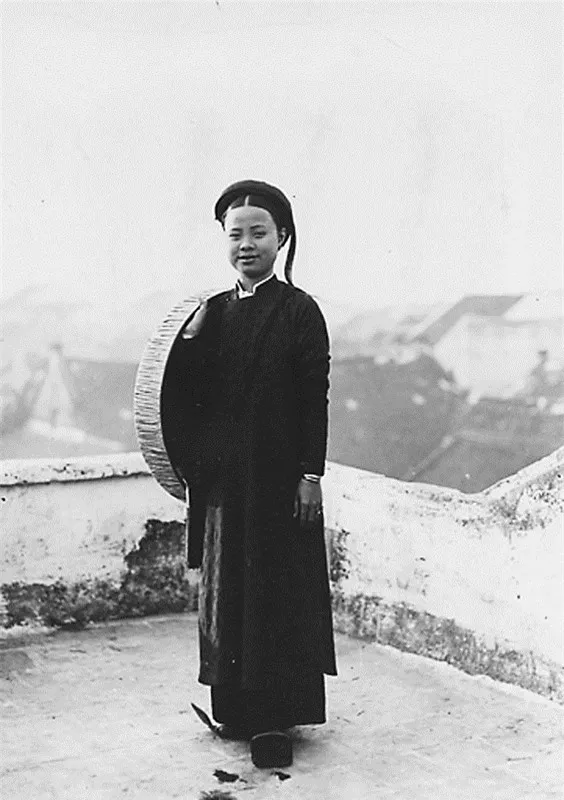
Folk Poetry and Ancient Origins of the Four-Panel Gown
"Where now is the four-part dress, the crow-beak kerchief, and the rustic black trousers?" Those simple, nostalgic verses by the folk poet Nguyễn Bính evoke the charming four-panel gown and the gentle soul of rural Vietnamese maidens, remaining deeply familiar to people across Vietnam who cherish the enduring country soul preserved in the Áo tứ thân.
To date, no one knows the exact origin of the áo tứ thân, though archaeological artifacts reveal carvings of long robes with two flowing flaps etched onto the surface of Ngọc Lũ bronze drums from several thousand years ago, demonstrating how Vietnamese traditional costume is the crystallization of over 4,000 years of history.
According to legend, during the uprising to expel Northern invaders from the country’s borders, the Trưng Sisters (Hai Bà Trưng) wore long two-panel golden robes. Out of deep reverence for the heroines, Vietnamese women avoided wearing unbroken two-panel robes and instead wore the four-panel áo tứ thân. Another practical interpretation notes that ancient handloom weaving techniques were rudimentary, producing narrow fabric strips only about forty centimeters wide, so tailors had to join four fabric pieces together to sew a complete robe.
From Cross-Collared Tunics to Kinh Bắc Cultural Pride
In its earliest ancestral form, the primitive Vietnamese gown—known as the áo giao lĩnh (cross-collared robe)—featured two front panels worn intersecting across the chest rather than knotted. To facilitate field labor and market trading, women began tying the two front flaps neatly at the waist, gradually transforming the cross-collared tunic into the classic áo tứ thân worn alongside the broad-brimmed nón quai thao across Northern Vietnam by the early nineteenth century.
Structurally, the áo tứ thân has two rear panels stitched together along the spine with the seam tucked inside, while the two front panels tie together at the waist to hang down the center without buttons. Paired with a silk yếm bodice, a crow-beak kerchief (khăn mỏ quạ), and a flat palm hat (nón quai thao), this ensemble is still faithfully preserved by the female liền chị and male liền anh folk singers of the Kinh Bắc region, as highlighted in part two of our search for the Áo tứ thân in Quan Họ songs. Between the seventeenth and nineteenth centuries, urban women also adapted the silhouette into the five-panel robe (áo ngũ thân) to express noble status and refinement.
Recently, with the evolution of contemporary fashion, the áo tứ thân has stepped onto modern runways in bold, stylized designs, including international beauty pageants. Yet many overly exaggerated adaptations have yet to win the full support of the Vietnamese public, who continue to value the authentic soul of traditional Kinh Bắc dress.