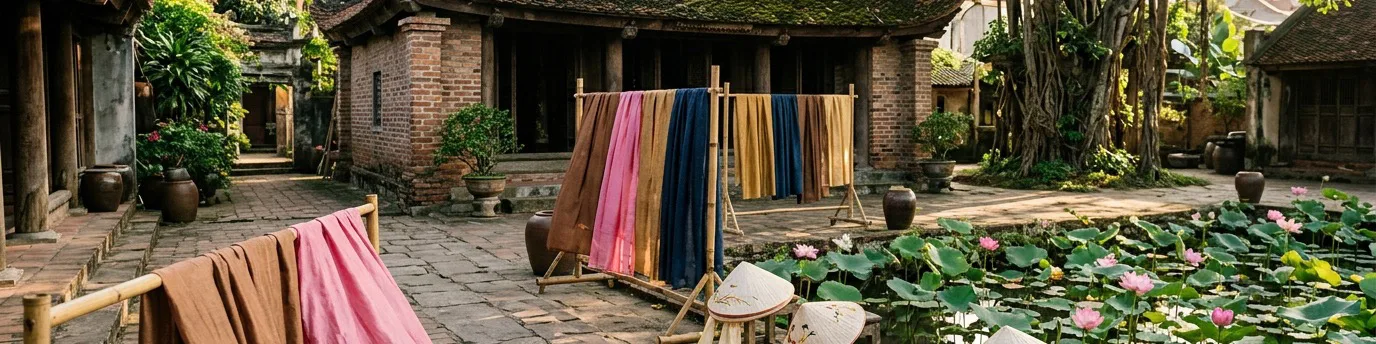
When I was still living at home in Vietnam, I rarely paused to reflect on the deeper cultural value or historical origins of the Ao Tu Than and our traditional flowing robes. Yet after settling in a quiet coastal town far from my homeland, I came to realize the true meaning of these ancestral garments. Today, a deep sense of pride fills my heart every time I put one on, even though I had worn traditional Vietnamese attire for so many years back in my old hometown without giving it a second thought.
A Fateful Bond with Purple Silk
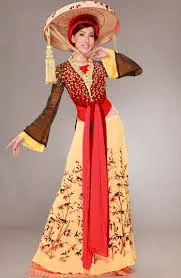
Sometimes I wonder whether a charming bond of fate has always drawn me toward traditional Vietnamese gowns and the gentle hue of purple blossoms. Over the years, a rich dark purple palette has accompanied me through countess seasons of life abroad, reminding me of those who go on finding the soul of the country in the Ao Tu Than whenever nostalgia calls. In the country where I now reside, the Lunar New Year (Tet) is not an official public holiday as it is in Vietnam, and the first day of the Lunar New Year often falls right in the middle of the working week. Whenever I have to go to the office on the first day of Tet, I make a point of wearing my traditional Vietnamese dress to work. It always becomes a special occasion where my international colleagues and friends gather to admire the craftsmanship and elegance of the gown I am wearing.
A Sunny Late-Summer Morning in Coastal Glenelg
I still vividly remember attending a major professional conference held in the grand hall of a large hotel in Glenelg, the breezy coastal suburb of Adelaide where I live. Looking out the window that morning and seeing golden sunlight dancing across the sky, I felt an irresistible urge to let the flowing silk panels catch the sea breeze. I chose a deep purple Ao Tu Than ensemble for the occasion. When I arrived near the venue, instead of pulling straight into the underground hotel garage, I noticed how clear and inviting the morning sky looked and decided to park along the quiet roadside so I could enjoy a leisurely walk to the entrance.
How glorious that late-summer morning was! The sky above Glenelg was calm and radiant with the mellow warmth of waning summer days. Unlike the harsh, blinding glare of mid-summer, the sunlight flickered gently with the first subtle hint of approaching autumn. Golden beams filtered down along the pavement, warming my shoulders, my hair, and the dark silk of my robe. A light ocean breeze carrying the faint scent of salt water drifted inland, softly lifting the two flowing panels of my dress to reveal the crisp white satin silk trousers beneath. As I strolled along the pebbled footpath, I could see curious gazes, admiring faces, and warm smiles from passersby behind my sunglasses, all drawn to Vietnamese traditional costume as the crystallization of more than 4,000 years of history.
Sharing Vietnamese Heritage with a Stranger
Just as I neared the hotel courtyard, a blonde local woman walking in the opposite direction paused and greeted me with remarkable courtesy and warmth. Fascinated by the attire, she gently reached out to feel the smooth, silky texture of the sleeve on my arm. Looking down at the deep indigo-purple Ao Tu Than—tailored with understated elegance and free of gaudy ornamentation—I smiled warmly and answered her questions about where the garment came from.
Even after my initial reply, the kind woman lingered on the sidewalk, eager to ask more about Vietnamese culture and traditional dress. I was thrilled to share our heritage, just as I always welcome every opportunity to introduce the artistry of the Ao Tu Than in the Kinh Bac homeland to international friends. Realizing that the conference opening was only minutes away and I no longer had enough time to continue our conversation, I politely excused myself, bade her farewell, and hurried toward the venue. When I reached the hotel gate and glanced back, the blonde woman was still standing on the footpath watching the flowing silk panels in the breeze. An indescribable happiness welled up inside me. Stepping into the main conference hall, I noticed dozens of eyes turning in my direction, admiring the timeless traditional dress of the Vietnamese people and filling me with quiet pride.
An Eternal Muse of Vietnamese Poetry and Art
Truly, the traditional silhouette—hugging a woman's slender upper body while letting the twin silk panels flutter gracefully like butterflies on an autumn breeze—possesses a dreamy, lyrical beauty that has inspired generations of artists. Across the rich treasury of Vietnamese poetry, literature, music, painting, and photography explored in our cultural meaning archives, few images are as evocative as those flowing panels, immortalized when poet Nguyen Sa poured his ecstatic devotion into verses celebrating the two silk flaps that carry a lover's very soul.