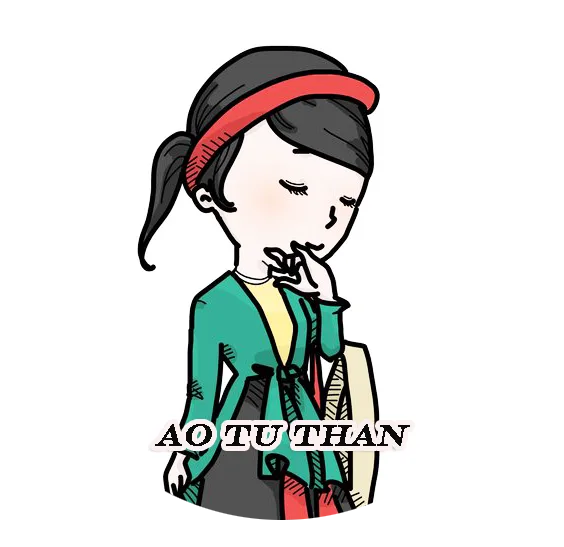
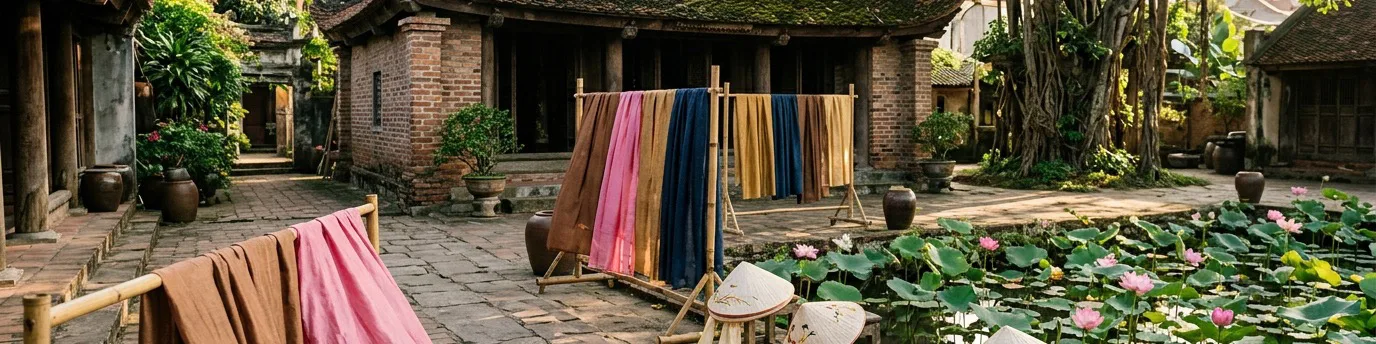
Through the shifting tides and vicissitudes of history, the traditional attire of Vietnamese women has evolved distinctively across every era. Beyond the iconic Ao Dai recognized around the world, each region of Vietnam cherishes its own signature heritage garment. While women of the southern waterways are known for the charming and practical Ao Ba Ba, women of Northern Vietnam have long treasured the Ao Tu Than—a four-panel tunic steeped in the rustic soul of the countryside and deeply intertwined with the cultural memory of the homeland. Exploring the cultural meaning and symbolism of Ao Tu Than reveals how a humble village garment became an enduring emblem of Vietnamese femininity.
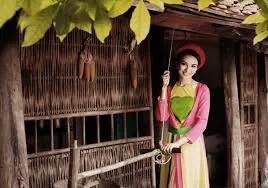
The Rustic Architecture of Northern Vietnam's Four-Panel Tunic
Widely worn throughout the 1920s and 1930s and rooted in centuries of rural tradition, the Ao Tu Than paired with a black crow-beak headscarf (khan mo qua) and a flat fringed palm hat (non quai thao) gave Vietnamese women a remarkably slender, poised, and graceful silhouette. Reaching just past the knees, the tunic is crafted from four narrow panels of fabric joined together in harmonious earthy tones. In earlier generations, rural women typically favored humble shades of light yam brown (nau non) or deep mahogany brown (nau gia) suited to agrarian life, a tradition celebrated in accounts of the Ao Tu Than as a beautiful symbol of Vietnamese women.
Structurally, the Ao Tu Than features two back panels sewn together along the spine and two open front panels without buttons, accompanied by two fitted sleeves that slip smoothly over the arms. Beneath the outer robe, women wore a traditional diamond-shaped silk bodice known as the yem, tailored either with a rounded scoop neckline (yem co xay) for daily work or a delicate swallow-wing V-neck (yem co canh nhan) for festive outings. Around the waist, a vibrant silk sash cinched the garment close to the body while the two front flaps were knotted neatly and left hanging down the front, accentuating a slim waist and allowing effortless movement. Paired with a flowing black rural skirt (vay dup) or wide silk trousers, the ensemble was versatile enough for tending rice fields by day and strolling through village markets or courtyard festivals by evening.
Layered Elegance and Family Philosophy
Depending on the occasion, Northern Vietnamese women styled the four-panel tunic in several distinct ways:
- Everyday Market and Field Attire: Women knotted the two front flaps securely at the waist or tucked them neatly over a woven belt for convenience during daily labor and market errands.
- Festive Multi-Layered Robes (Mo Ba Mo Bay): During summer temple festivals and spring processions, young women dressed in elaborate layers of three or seven sheer silk tunics draped one over another, allowing the vibrant collars and hems to fan out in a rainbow of colors.
- Profound Moral Symbolism: In Vietnamese folk philosophy, the four panels of the robe honor the four parents of a married couple—one's birth parents and one's parents-in-law (tu than phu mau)—while the two front panels tied together symbolize the lifelong devotion and harmony of husband and wife embracing one another.
Rediscovering Ancestral Roots at the Lim Festival
Although the Ao Tu Than is no longer worn as daily workwear, it remains strikingly vibrant during cultural holidays, folk stage performances, and traditional spring gatherings. In the ancient Kinh Bac region, male and female Quan Ho folk singers (lien anh and lien chi) proudly wear the Ao Tu Than with the crow-beak kerchief and fringed palm hat during the annual Lim Festival. Seeing how Kinh Bac women honor the beauty of the Ao Tu Than captivates domestic audiences and delights international travelers encountering Vietnam's folk heritage for the first time.
For Vietnamese women today, slipping into the four-panel tunic and singing antiphonal Quan Ho verses on dragon boats along the river feels like a heartfelt return to ancestral roots—an intimate rediscovery of the country soul preserved since childhood, much like the nostalgic reflections found in memories of the Ao Tu Than from afar. The celebrated romantic poet Nguyen Binh once distilled the entire spirit of this heritage garment into just four classic verses, capturing forever the gentle grace of a woman dressed in the unmistakable traditional attire of the Vietnamese countryside.