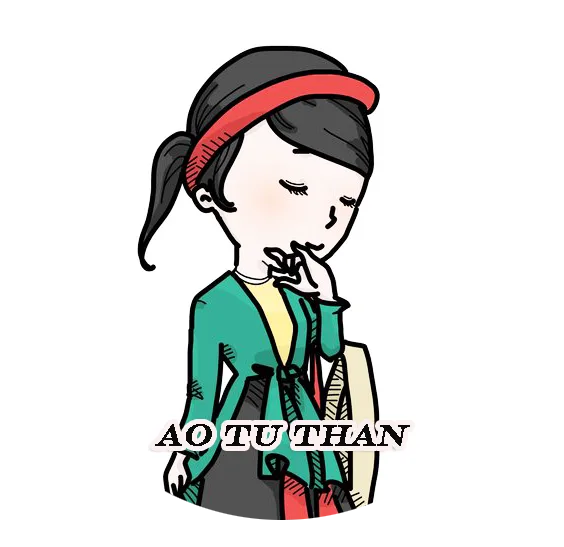
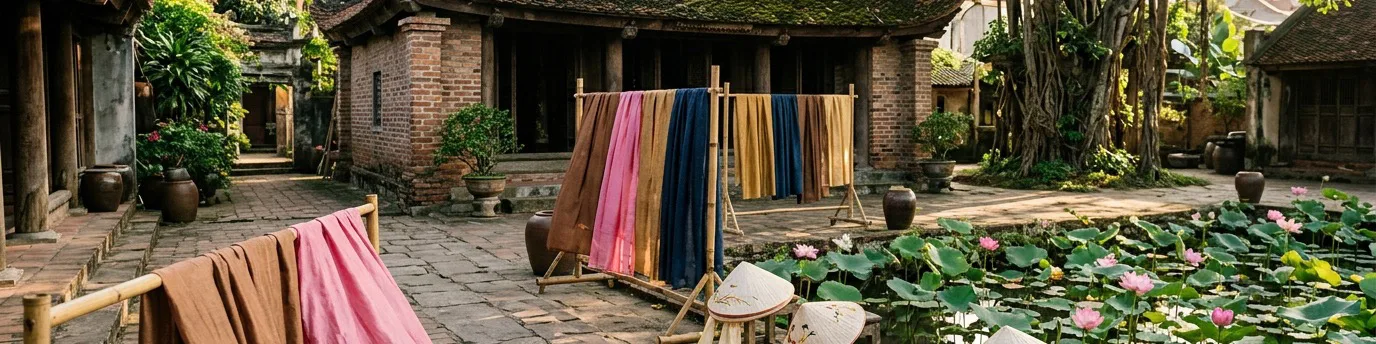
The Áo tứ thân—literally the "four-part dress"—stands as the quintessential quartet of traditional female attire in Northern Vietnam. Widely worn as everyday clothing up until the early twentieth century, the four-panel robe is today treasured primarily during traditional village festivals and folk performances, as highlighted across our general introduction archives on traditional attire.
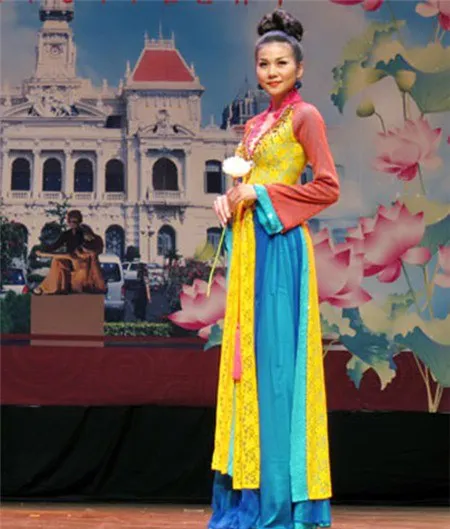
Structure of the Early Twentieth-Century Áo Tứ Thân
Between the 1920s and 1930s, the everyday áo tứ thân hung from the collar down to about twenty centimeters below the knee. The garment has two front panels and two rear panels. Its front splits into two separate flowing flaps, while the rear is divided into two panels stitched together vertically along the spine to form the central seam known as the sống áo. Because traditional handlooms wove narrow fabric strips only thirty-five to forty centimeters wide, tailors joined four panels together, giving rise to the name áo tứ thân, as further detailed in our companion overview introducing the classic Áo tứ thân.
With two main sides and four flaps, the buttonless áo tứ thân has a long silhouette and two fitted sleeves for the arms to slip through. Underneath, a woman wears a traditional silk bodice called an yếm—either a modest high-necked work bodice (yếm xây) or a deeply cut V-neck swallow-wing bodice (yếm cánh nhạn).
Color Palettes and Traditional Styling
Deep, subdued colors were chosen for older women’s bodices, whereas peach-blossom pink or crimson lotus shades suited young girls. Over the yếm sits a thin white inner blouse (áo cánh mỏng), while a bright green or blue silk sash ties around the waist to secure the inner blouse with a black skirt or dark trousers, adding decorative color. Flowing gracefully, the buttonless áo tứ thân keeps the wearer neat and slender—practical enough for field work yet airy and refined for festive outings.
The two-piece back coat is usually crafted from earthy brown or tan fabric rather than indigo, while the two front panels tie together at the waist to flatter a slim midsection and stay unfastened above to reveal the colorful yếm and a one-to-two-centimeter collar edge. Reaching nearly to the heels with snug sleeves, the dress embodies the enduring cultural soul of the Vietnamese countryside. On theatrical stages—and at cultural events where singer Phi Nhung wears the Áo tứ thân and nón quai thao—the costume for rural women is often sewn from dark cloth with round buttons tucked under the right arm, honoring Northern Vietnam’s iconic four-panel attire.